
Counterfeit malaria drugs: a silent crime in the face of a life-threatening emergency
Malaria remains one of the most devastating infectious diseases on the planet. While the scientific community and humanitarian organizations are making tremendous efforts to eradicate this scourge, a parallel threat is undermining these advances. The counterfeiting of antimalarial drugs has become a highly lucrative black market for criminal networks.
As highlighted by the massive seizures made during Operation Pangea XVIII, coordinated by INTERPOL, traffickers no longer hesitate to counterfeit medications that are essential to patients’ survival. Faced with counterfeits that are visually indistinguishable from the real thing, chemical validation in a laboratory is now the only safeguard for ensuring the effectiveness of treatment and saving lives.
Understanding Malaria and Its Treatment Options
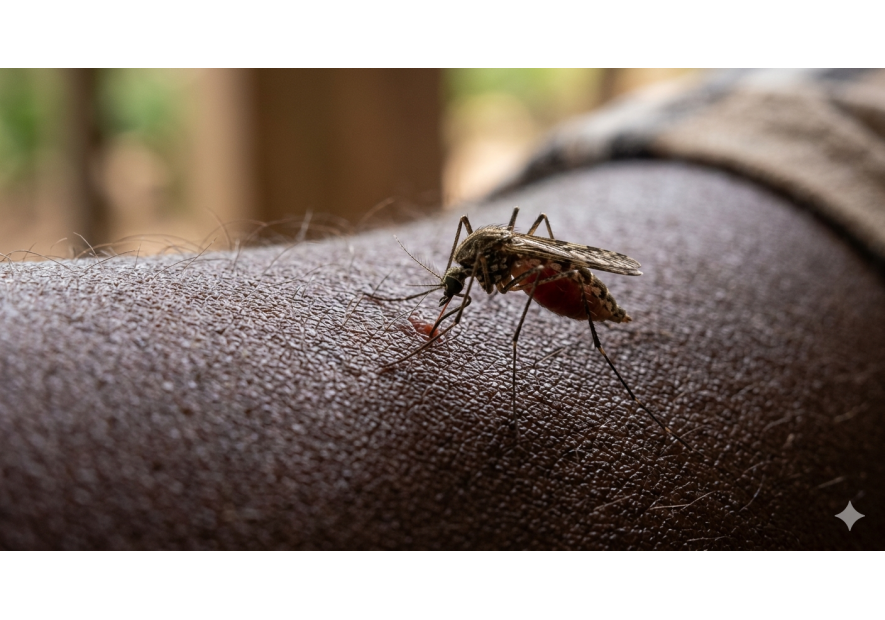
Malaria is a potentially fatal disease caused by parasites of the genus Plasmodium, transmitted to humans through the bite of infected female Anopheles mosquitoes. The most dangerous and widespread parasite, particularly on the African continent, is Plasmodium falciparum. Once in the bloodstream, it attacks red blood cells, causing high fevers, severe anemia, and, in its neurological form, coma or death.
To eliminate this parasite, the World Health Organization (WHO) recommends the use of highly specific compounds, typically in combination to prevent the development of resistance.
The main active ingredients and antimalarial drugs:
Artemether and Lumefantrine: This is the most common artemisinin-based combination therapy (ACT), marketed under the brand name RIAMET. Artemether rapidly kills most of the parasites, while lumefantrine, which has a longer half-life, eliminates any remaining parasites to prevent relapse.
Artemether: Used as a single-agent intravenous therapy for the emergency treatment of severe malaria prior to switching to oral therapy.
Chloroquine: Historically the standard treatment, its use is now limited to certain geographic areas due to the high levels of resistance developed by the parasite.
Sulfadoxine and Pyrimethamine: Often used for intermittent preventive treatment, particularly in pregnant women and infants.
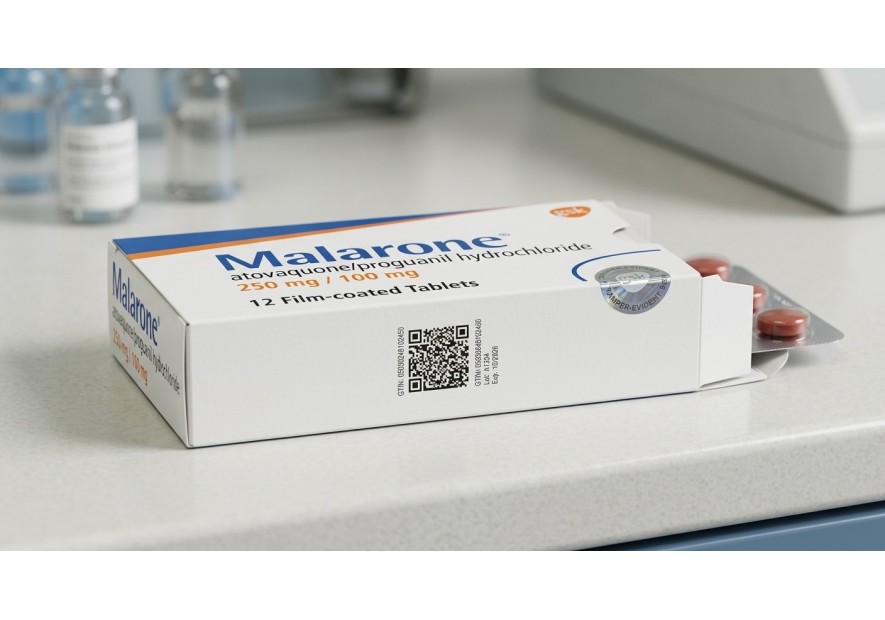
Atovaquone and Proguanil: This combination, marketed under the brand name MALARONE, is effective for the preventive treatment of malaria.
The devastating impact of counterfeit treatments on a deadly disease
Although considered essential medicines by the WHO, antimalarial drugs are nevertheless a prime target for pharmaceutical crime. The counterfeiting of antimalarial drugs takes several particularly insidious forms:
The pitfall of underdosing
To maximize their profits while evading crude rapid screening tests, counterfeiters include a minuscule amount of the active ingredient (for example, 15% of the required dose). This underdosing is criminal: it does not cure the patient, but it “acclimates” the parasite to the molecule, dramatically accelerating the development of global resistance to CTA.
"Placebo" pills
Many seizures have revealed pills consisting solely of chalk, starch, sugar, or industrial talc. When faced with a Plasmodium falciparum infection, every hour counts. Giving a feverish child an empty pill is tantamount to depriving them of treatment, leading to a fatal outcome within a few days.
Poor storage conditions
Even when a drug is initially genuine, its passage through clandestine parallel networks exposes it to extreme temperatures and high humidity. These adverse conditions compromise the chemical stability of artemether or lumefantrine, rendering the product ineffective.
Pharmanalyse: Certifying Antimalarial Drugs to Ensure Recovery
Given that counterfeiters are now able to perfectly replicate aluminum blister packs, cardboard packaging, and official lot numbers, visual inspection alone is no longer sufficient.
The Importance of HPLC-UV Analysis
Pharmanalyse offers a laboratory drug analysis service specifically designed to detect counterfeit malaria medications. Using High-Performance Liquid Chromatography coupled with an Ultraviolet detector (HPLC-UV), our laboratory provides indisputable results:
Verification of the active ingredient: We certify the actual and exclusive presence of the required molecules (e.g., artemether/lumefantrine).
Quantification of the active ingredient to the nearest milligram: We measure the exact concentration of the active ingredient to eliminate any risk of underdosing.
Impurity screening: We isolate chemical contaminants or thermal degradation products that could be toxic to the body.
An essential solution for securing the healthcare chain
This quality control initiative is aimed directly at frontline public health workers:
Non-Governmental Organizations (NGOs): To verify the compliance of antimalarial drug stocks prior to their deployment during humanitarian missions in endemic areas.
Wholesalers and importers: To verify the reliability of international manufacturers and ensure the legal security of their supply chains.
Customs authorities: To obtain rapid analytical testing in cases of suspicious seizures at the border, thereby preventing counterfeit medicines from entering the domestic market.
Science in the Service of Life
You can’t defeat a deadly disease with counterfeit medications. The counterfeiting of malaria drugs is a scourge that requires a relentless technological response. By making HPLC-UV analysis a standard practice with Pharmanalyse, healthcare professionals and distributors can ensure that every treatment administered is a genuine path to recovery.

Artemether - Coartem - Riamet - Paluther - Artefan Analysis Artemether - Coartem - Riamet - Paluther - Artefan Analysis
Laboratory analysis of drugs to certify the presence of Artemether and measure the quantity of Artemether. The level of uncertainty of the Artemether content analysis depends on the declination selected (Standard <20%, Precise <10% or Regulatory <5%). Follow the instructions to send your...
Price €349.00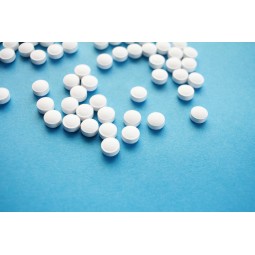
Check My Med - Participatory Science Check My Med - Participatory Science
Join Pharmanalyse in the fight against counterfeit and illegal drugs! Order our drug analysis and contribute to knowledge about the quality of medicines on the market. Our laboratory analyzes your drug, studies the data and publishes the results in a summary report accessible to the public....
Price €49.00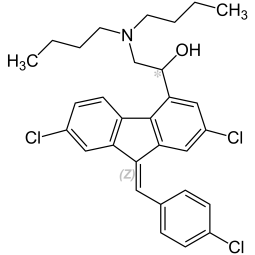
Lumefantrine - Coartem - Riamet Analysis Lumefantrine - Coartem - Riamet Analysis
Laboratory analysis of drugs to certify the presence of Lumefantrine and measure the amount of Lumefantrine. The level of uncertainty of the Lumefantrine content analysis depends on the declination selected (Standard <20%, Precise <10% or Regulatory <5%). Follow the instructions to send...
Price €149.00
Atovaquone - Malarone Analysis Atovaquone - Malarone Analysis
Laboratory analysis of the drug to confirm the presence of atovaquone and measure its concentration. The level of uncertainty in the atovaquone content analysis depends on the selected specification (Standard <20%, Precise <10%, Regulatory <5%). Follow the instructions to send your...
Price €149.00

Proguanil - Malarone Analysis Proguanil - Malarone Analysis
Laboratory analysis of a drug to confirm the presence of proguanil and measure its concentration. The level of uncertainty in the proguanil content analysis depends on the selected specification (Standard <20%, Precise <10%, Regulatory <5%). Follow the instructions to send your...
Price €249.00
Leave a comment