
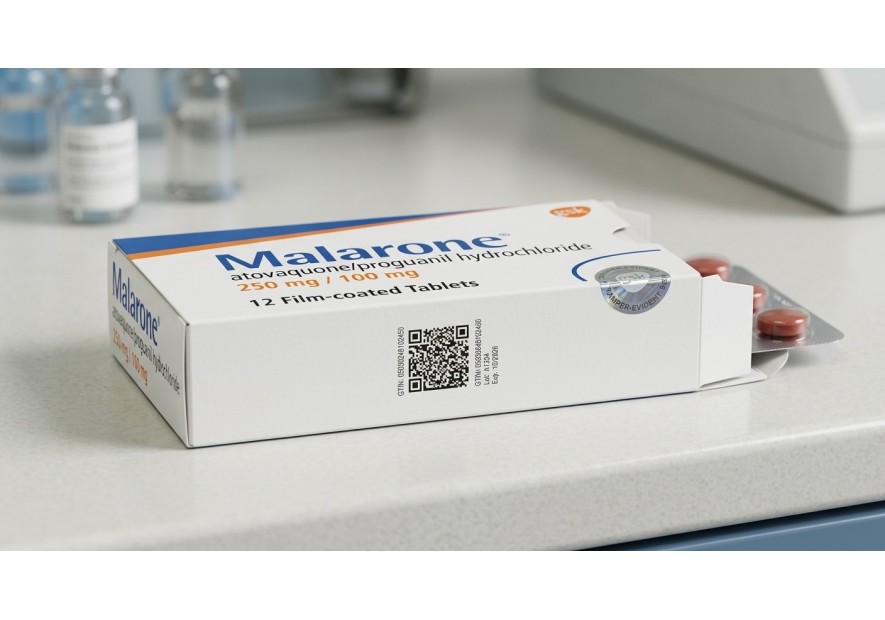
Counterfeit Medicines and Customs Inspections: The Challenge of Porous Borders
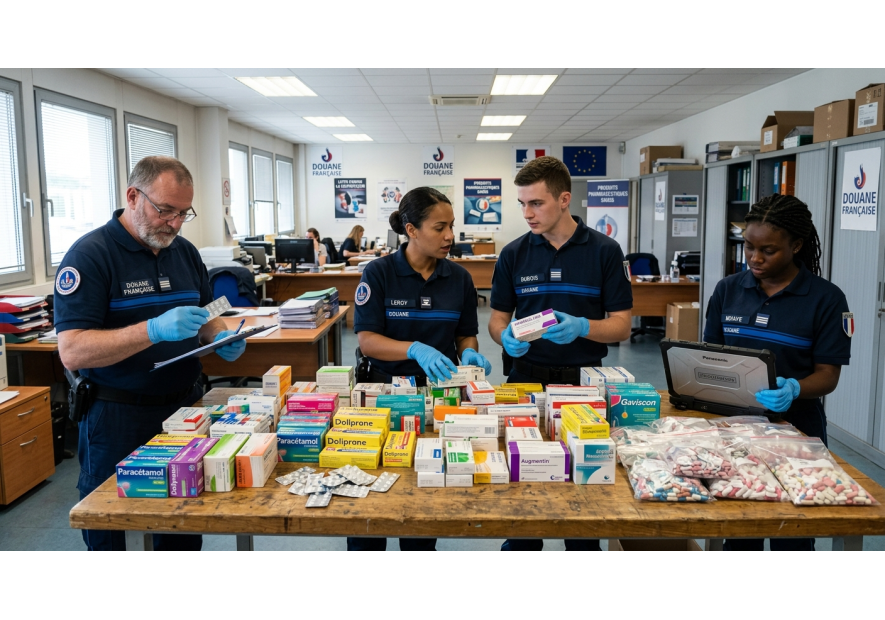
Combating counterfeit health products is now one of the most complex tasks facing customs agencies. Despite state-of-the-art surveillance technologies, counterfeit medicines and customs controls are confronted with a criminal reality that has exploited the fluid nature of global trade. To understand this crisis, it is necessary to distinguish between three distinct methods of introduction, each presenting its own operational challenges.
Traffic Segmentation: Three Facets of Illegality
E-commerce (fragmentation of traffic)
This is the most dynamic distribution method. Traffic no longer relies on large containers, but on millions of small packages shipped by mail or express delivery.
The challenge: A massive volume of packages, low declared value, and anonymous senders. Customs officials can physically inspect only a tiny fraction of this flow.
Massive imports (industrial risk)
This involves the diversion of entire containers, often concealed under declarations of ordinary goods (office supplies, textiles).
The challenge: Although these shipments are easier to detect through targeting (risk profiling), they use highly sophisticated networks of shell companies to legitimize customs documents.
Undercover legal channels (internal permeability)
This is the most insidious scenario: the introduction of counterfeit products into the authorized distribution chain itself.
The challenge: Counterfeiters take advantage of the resale of surplus or returned products among wholesalers. In this case, standard customs inspections are ineffective because the goods are accompanied by valid documentation of origin.
Why Do Borders Remain Porous?
Several structural factors account for the difficulty of conducting inspections:
The complexity of declarations: The number of drug product codes is enormous. Without on-site laboratory analysis, it is impossible for a customs officer to visually distinguish a high-quality counterfeit from a genuine drug.
Lack of international harmonization: Traffickers take advantage of differences in legislation. A shipment blocked in a European port can be rerouted to a third country with less stringent controls before re-entering the EU.
The Boom in Express Freight: The emphasis on fast delivery (e-commerce) is forcing customs authorities to speed up clearance processes. Speed is becoming an ally of criminals, at the expense of security.
Diversion of Active Pharmaceutical Ingredients (APIs): Customs authorities monitor finished drugs, but trafficking in powders (active pharmaceutical ingredients) is much more difficult to regulate, as these powders have legitimate industrial uses.
The Scientific Answer: Regaining Control Over Uncertainty
While customs cannot block the entire flow of goods, consumer safety now depends on individual verification. Since the product has crossed the border, it is up to the patient to verify its compliance.
Pharmanalyse offers an independent audit using High-Performance Liquid Chromatography (HPLC-UV), the only way to confirm what the regulatory authorities were unable to detect:
Molecular identification: Confirmation that the active ingredient is identical to the expected one.
Accuracy quantification: Verification of dosage, which is often inconsistent in products that have passed through opaque distribution channels.
Contaminant Screening: Identification of residues resulting from transportation, improper storage, or illicit manufacturing that compromise food safety.
Customs can't see everything
The interplay between counterfeit drugs and customs controls shows that safety cannot rely solely on government institutions. Given the ingenuity of criminal networks in crossing borders, your vigilance is the final link in the chain. If you have any doubts about the origin or history of your medication, scientific analysis is your essential safeguard.
Do you have concerns about a medication you received through a channel whose origin you don’t know? Don’t take any risks with your health. Order your HPLC-UV analysis today from the Pharmanalyse catalog, send your medication to the lab, and receive an expert report certified by our scientists.

Check My Med - Participatory Science Check My Med - Participatory Science
Join Pharmanalyse in the fight against counterfeit and illegal drugs! Order our drug analysis and contribute to knowledge about the quality of medicines on the market. Our laboratory analyzes your drug, studies the data and publishes the results in a summary report accessible to the public....
Price €49.00
Leave a comment