
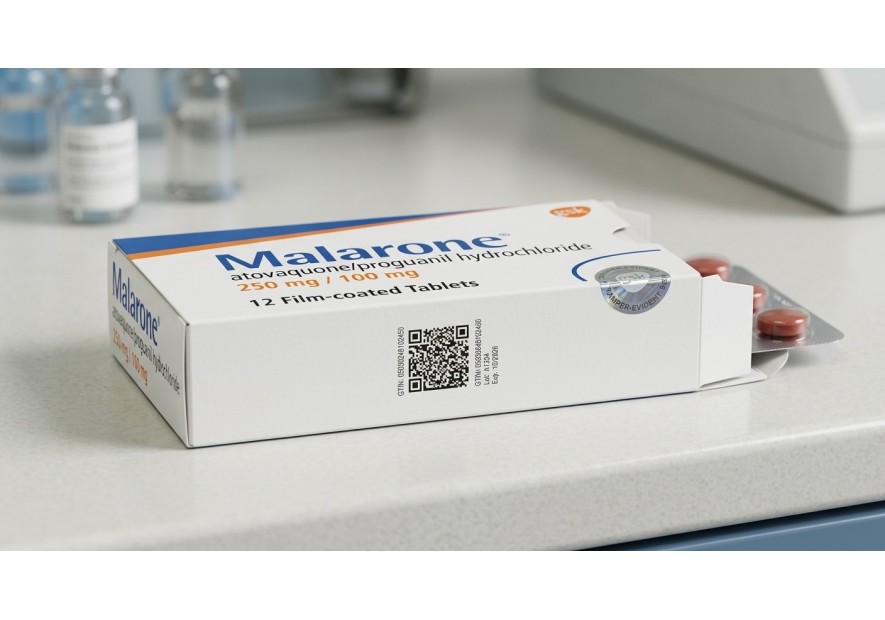
Laboratory Analysis of Ivermectin: Avoiding Under-Dosed Medications
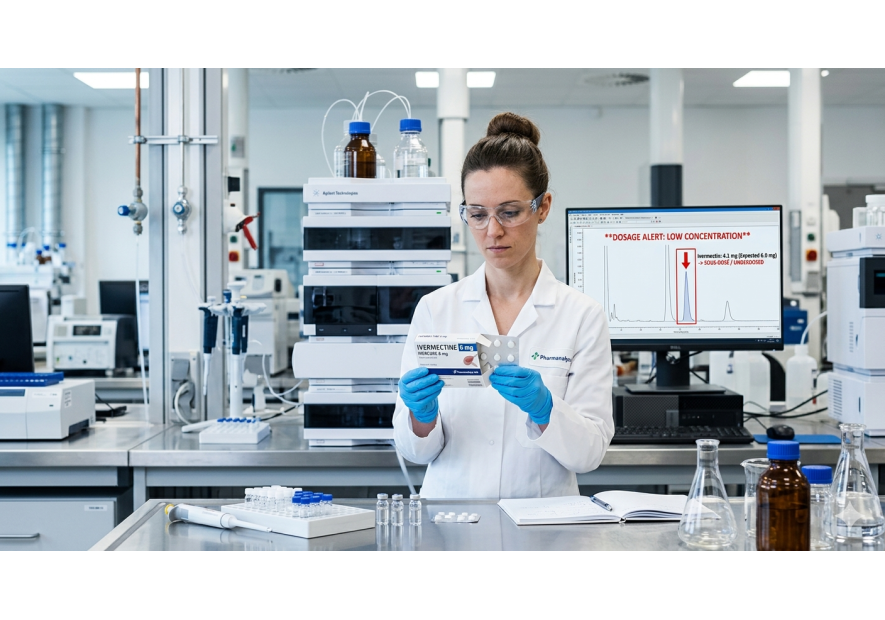
Access to medications outside official channels and the proliferation of online purchasing platforms have led to an alarming increase in the circulation of non-compliant pharmaceutical products. Among these, ivermectin is a particular cause for concern. Between outright counterfeits and legal but poorly manufactured drugs, there is a real risk of encountering an underdosed product. In the face of this public health challenge, laboratory analysis of ivermectin is the only guarantee of safety for the consumer.
What is ivermectin?
Ivermectin is a compound belonging to the therapeutic class of antiparasitic agents, specifically the family of macrocyclic lactones (derivatives of avermectins). Originally discovered for veterinary use, it has become an essential drug in human medicine and is included on the WHO Model List of Essential Medicines.
Mechanism of action
The active ingredient in ivermectin targets glutamate-gated chloride channels in the nerve and muscle cells of invertebrates. By binding to these channels, ivermectin increases the membrane’s permeability to chloride ions, leading to cell hyperpolarization. The result is rapid neuromuscular paralysis of the parasite, leading to its death, without affecting the human host (in whom these channels are present only in the central nervous system, which is protected by the blood-brain barrier).
Dosage and Indications
Ivermectin is primarily used to treat scabies (Sarcoptes scabiei), strongyloidiasis (angulostomiasis), and filariasis. The standard dosage in humans is generally 200 µg/kg (micrograms per kilogram of body weight) as a single dose. In some cases of severe scabies, a second dose is necessary 8 to 15 days later to eliminate parasites that hatched after the first treatment.
The risks of taking an underdosed course of ivermectin
Under-dosing is an insidious threat. Unlike a counterfeit product containing a toxic substance, an under-dosed medication does contain the active ingredient, but in an amount insufficient to reach the therapeutic threshold. Conducting a laboratory analysis of ivermectin helps avoid the following three major risks:
Treatment failure
This is the most immediate risk. If the blood concentration of ivermectin does not reach the level needed to paralyze the parasites, the infection persists. For a condition such as scabies, this means continued transmission to others and a decline in the patient’s quality of life.
The development of resistance
Just as with antibiotics, exposing parasites to sub-lethal doses of medication promotes the selection of resistant strains. Ultimately, this renders the drug ineffective not only for the patient but for the entire population.
Uncertainty regarding excipients
A drug with an incorrectly measured active ingredient is often a sign of clandestine manufacturing or inadequate quality control. This raises questions about the purity of the other components (excipients), which may contain impurities or heavy metals.
When in doubt, only a laboratory analysis of ivermectin can resolve the uncertainty and confirm that the tablet actually contains the 3 mg, 6 mg, or 12 mg stated on the packaging.
Pharmanalyse: The Precision of HPLC-UV for Certifying Your Medication
Against the backdrop of a rise in parallel supply chains, Pharmanalyse stands out as a trusted solution. It is crucial to understand that a drug’s appearance, taste, or packaging in no way reflects its actual quality.
The reference method: HPLC-UV
To ensure absolute reliability, Pharmanalyse uses High-Performance Liquid Chromatography coupled with an ultraviolet detector (HPLC-UV). This is the gold standard method used by the global pharmaceutical industry and regulatory authorities (ANSM, FDA, EMA).
The process of analyzing ivermectin in a laboratory using HPLC consists of two stages:
Identification (Separation)
The sample is injected into a chromatographic column. Each molecule moves at a different speed depending on its physical and chemical properties. This allows ivermectin to be separated from all the other components of the tablet.
Quantification (Measurement)
The UV detector measures the molecule's absorbance at a specific wavelength. By comparing this signal to a pure reference standard, the laboratory determines the exact amount of active ingredient present with an accuracy of approximately 99%.
Why choose an independent laboratory?
Only laboratory analysis can confirm the identity of a pharmaceutical active ingredient and determine its exact concentration. By working with Pharmanalyse, you benefit from cutting-edge technical expertise to ensure the safety of your treatment regimen. Whether you are an individual looking to verify a purchase or a healthcare professional, laboratory analysis of ivermectin provides complete transparency where online pharmacy marketing remains vague.
When it comes to health, there is no room for guesswork. Given the risks of underdosing, scientific verification is your best ally in ensuring the effectiveness of your antiparasitic treatment.
Check My Med - Participatory Science Check My Med - Participatory Science
Join Pharmanalyse in the fight against counterfeit and illegal drugs! Order our drug analysis and contribute to knowledge about the quality of medicines on the market. Our laboratory analyzes your drug, studies the data and publishes the results in a summary report accessible to the public....
Price €49.00

Ivermectine - Stromectole - Mectizan - Soolantra - Ivergalen Analysis Ivermectine - Stromectole - Mectizan - Soolantra - Ivergalen Analysis
Laboratory analysis of a drug to confirm the presence of ivermectin and measure its concentration. The level of uncertainty in the analysis of ivermectin content depends on the selected tolerance level (Standard <20%, Precise <10%, or Regulatory <5%). Follow the instructions to send your...
Price €199.00
Leave a comment