
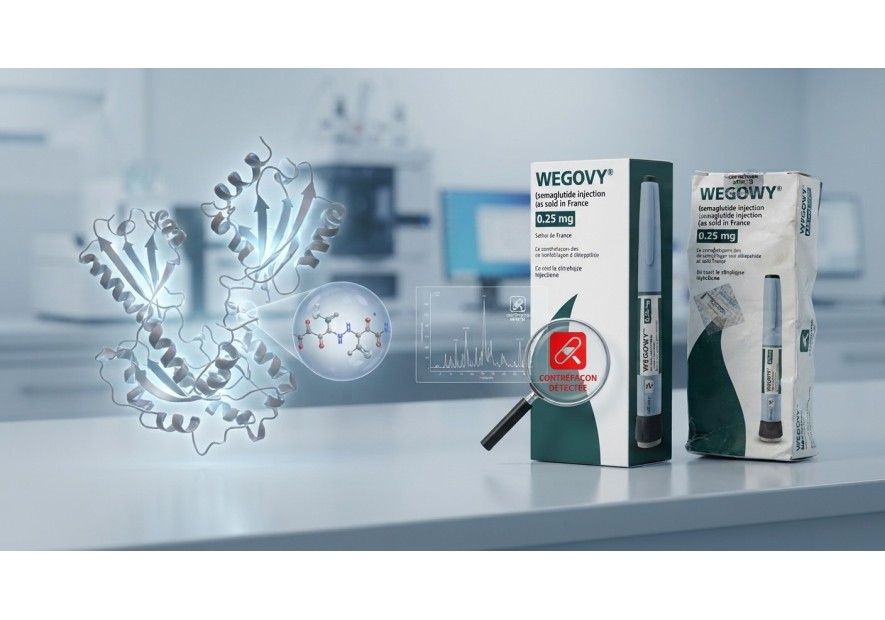


GLP-1 Therapy and Counterfeiting: Health Concerns and Analytical Challenges
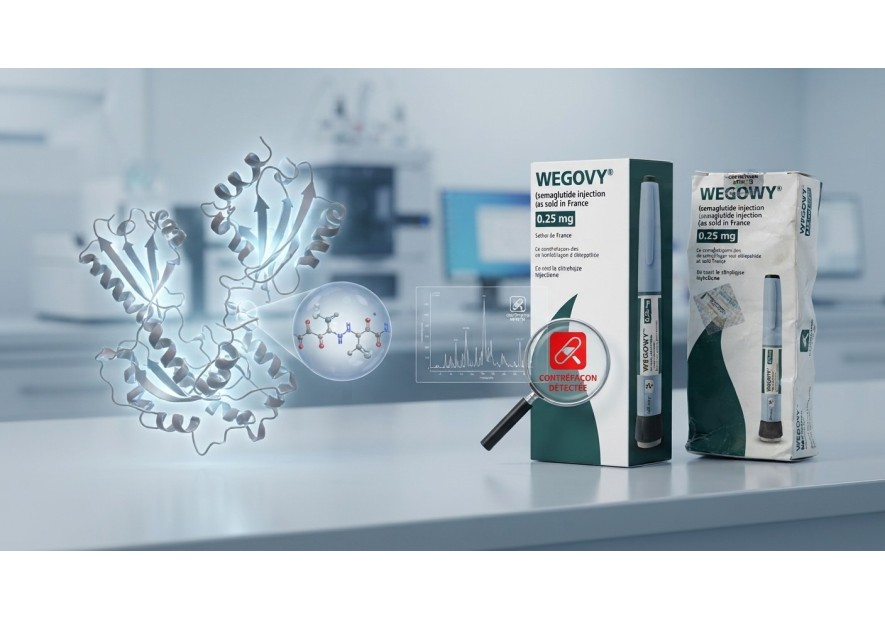
GLP-1 (Glucagon-Like Peptide-1) receptor agonists are currently in the spotlight in both the medical community and the media. These molecules were originally designed to mimic the action of a natural intestinal hormone secreted after a meal, promoting glucose-dependent insulin secretion, slowing gastric emptying, and acting on satiety centers. Chemically speaking, they are peptides (often semisynthetic or synthetic, modified to resist enzymatic degradation and prolong their half-life) that share the structural and conformational complexity of protein macromolecules.
What are the main GLP-1 treatments?
Among the treatments available on the global market and the major pharmaceutical companies that develop them, the following stand out in particular:
Novo Nordisk: with semaglutide (marketed, among other names, as Ozempic for type 2 diabetes and Wegovy for weight management) as well as liraglutide (Victoza, Saxenda).
Eli Lilly: with tirzepatide (Mounjaro, Zepbound), a dual GIP/GLP-1 agonist that has established itself as a major competitor, as well as dulaglutide (Trulicity).
Sanofi: has historically been active in this therapeutic class with lixisenatide (Lyxumia).
AstraZeneca: a long-standing player in this class of drugs with exenatide (Byetta, Bydureon).
Clinical indications dominated by obesity
Originally indicated for the treatment of type 2 diabetes to improve glycemic control, GLP-1 medications have also demonstrated cardiovascular and renal benefits in certain patient populations. Today, the management of obesity (and severe overweight associated with comorbidities) represents the strongest and most visible trend in the global market. The pursuit of rapid weight loss—sometimes driven by aesthetic goals or limited access to specialized care—has propelled demand to unprecedented levels.
High costs and prescription requirements: the breeding ground for illegal pharmacies
Two major factors are driving the growth of parallel trade and the gray market: the high cost of these treatments and the requirement for a doctor’s prescription. When a medication is expensive, subject to strict reimbursement criteria, prone to supply shortages, or restricted to specific prescription indications, some consumers turn to the Internet.
Illegal or unregulated websites capitalize on this demand by offering injection pens, vials, or powders marketed as quick or inexpensive alternatives, often without any real medical oversight. The health risks associated with these counterfeit products are considerable: a complete absence of the active ingredient, dangerous underdosing or overdosing (which can lead, in particular, to severe hypoglycemia or significant digestive disorders), the presence of impurities, bacteria, or undeclared substances, as well as breaks in the cold chain, which is essential for the stability of the peptides.
Pourquoi l'analyse des GLP-1 est beaucoup plus complexe que celle des petites molécules
Unlike conventional “small molecules” (such as ibuprofen or ivermectin), which have simple, stable structures that are generally well characterized by routine chromatography, GLP-1 drugs are peptides or proteins. Their amino acid chains, chemical modifications (such as the addition of lipid chains or fatty acids to prolong the duration of action), and three-dimensional structure make quality control significantly more challenging.
A counterfeit product may contain a truncated peptide, a modified sequence, isomers, oxidation or deamidation products, or protein aggregates that could trigger adverse immune reactions. Detecting these subtle differences requires advanced analytical protocols and high-resolution equipment.
Common laboratory analytical methods used to verify the identity, purity, and quality of GLP-1 medications include:
High-performance liquid chromatography (HPLC) and ultra-high-performance liquid chromatography (UHPLC), particularly reverse-phase HPLC (RP-HPLC), to separate the active ingredient from impurities and degradation products.
Mass spectrometry (LC-MS / MS-MS / high-resolution), which is essential for determining the exact molecular mass, verifying the peptide sequence, and identifying closely related variants.
Peptide mapping, which makes it possible to precisely locate any chemical modifications (oxidation, deamidation, cleavages) along the chain.
Steric exclusion chromatography (SEC), used to detect and quantify aggregates and oligomers.
Methods for analyzing purity and related impurities (such as capillary electrophoresis or additional sterility and endotoxin tests for injectable formulations).
Given the increasing sophistication of counterfeit products online, physical-chemical and analytical testing in laboratories plays a vital role in objectively assessing the authenticity of products on the market and protecting public health.

Leave a comment