


The Fight Against Illegal Online Pharmacies: A Public Health Imperative in the Digital Era

The explosive growth of e-commerce has profoundly transformed our access to healthcare products. While this development offers undeniable convenience for patients, it has also opened a major loophole for organized criminal networks. By mid-2026, the fight against illegal online pharmacies had become one of the central pillars of global health security, given the colossal human, economic, and security stakes involved.
The Illusion of the Digital Pharmacy: Why Is Danger Everywhere?
It has now become commonplace for anyone to set up an online store. This technical ease, coupled with the emergence of artificial intelligence (AI) tools, allows criminal networks to generate extremely convincing content capable of deceiving even the most suspicious users. These sites no longer merely crudely imitate legitimate pharmacies; they use sophisticated search engine optimization (SEO) techniques to appear among the top search engine results, cloaking themselves in a false sense of legitimacy that deceives both algorithms and patients.
The fight against illegal online pharmacies faces a harsh reality: websites are being created so quickly that authorities cannot keep up with identifying and shutting them down. Every day, dozens of new platforms appear, offering essential medications without requiring a prescription, turning the internet into a vast global black market.
Why is the active ingredient the primary target?
In this race for profit, the active ingredient in a drug is the first thing criminal networks sacrifice. To understand why this component is so often missing, underdosed, or replaced with toxic substances, we must consider three major economic drivers:
Prohibitive cost: The active ingredient is the most expensive component of the drug. By removing it or replacing it with inert excipients such as chalk or plaster, criminals exponentially maximize their profit margins.
The Complexity of the Supply Chain: Access to pure active ingredients is strictly limited to laboratories that comply with Good Manufacturing Practices (GMP). Illegal networks, which are excluded from these channels, rely on low-quality sources—or, in some cases, produce dangerous synthetic substances.
The lure of profit: Counterfeit drugs are an ideal commodity for cybercrime: a high-value product that is easy to transport and store, and whose counterfeiting offers a higher financial return than many other illicit activities, with a perceived low risk.
In light of this threat, the precise quantification of the active ingredient using high-performance liquid chromatography coupled with UV detection (HPLC-UV) remains the most reliable identification test for detecting adulteration and protecting the public.
The Drivers of the International Response
The fight against illegal online pharmacies can only be effective if it is comprehensive, coordinated, and technology-driven. Authorities are now implementing a multidimensional strategy:
Field Operations and Cyber Investigations
International organizations, particularly through INTERPOL and its “Pangea”-type operations, coordinate global raids to dismantle networks, shut down websites, and intercept shipments. At the same time, specialized “cyber-customs” units track down sellers on the Darknet and social media, where trafficking is hidden.
Pressure on Digital Intermediaries
One of the most promising strategies is to cut off sources of revenue. Authorities are increasingly collaborating with payment service providers to block financial transactions destined for illegal websites. Similarly, pressure is mounting on search engines to delist unlicensed websites.
Supervision and Education
The creation of secure domain names, such as “.pharmacy,” and the requirement to use official logos enable consumers to immediately identify legitimate sources. These measures are complemented by large-scale awareness campaigns. The goal is to teach the public to recognize warning signs: abnormally low prices, failure to request a prescription, or promises of miraculous cures.
Toward a Hybrid Solution
The digital threat is an asymmetric war. The fight against illegal online pharmacies requires an unprecedented alliance between analytical pharmacy—to detect adulterated products—and computer science—to neutralize digital attack vectors.
The influence of cybercrime networks in this black market has become undeniable. They are no longer content with simply selling pills; they are exploiting vulnerabilities in the global healthcare system. In 2026, it is therefore imperative to strengthen cooperation between health authorities, customs agencies, and tech giants. Every site that is shut down is a victory, but true success will lie in our ability to clean up the digital space so that medicine finally receives the protection it deserves as an essential good for humanity.
Check My Med - Participatory Science Check My Med - Participatory Science
Join Pharmanalyse in the fight against counterfeit and illegal drugs! Order our drug analysis and contribute to knowledge about the quality of medicines on the market. Our laboratory analyzes your drug, studies the data and publishes the results in a summary report accessible to the public....
Price €49.00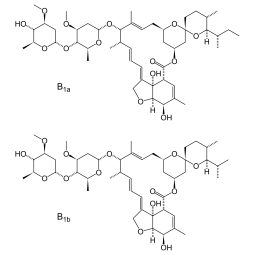
Ivermectine - Stromectole - Mectizan - Soolantra - Ivergalen Analysis Ivermectine - Stromectole - Mectizan - Soolantra - Ivergalen Analysis
Laboratory analysis of a drug to confirm the presence of ivermectin and measure its concentration. The level of uncertainty in the analysis of ivermectin content depends on the selected tolerance level (Standard <20%, Precise <10%, or Regulatory <5%). Follow the instructions to send your...
Price €149.00 Regular price €199.00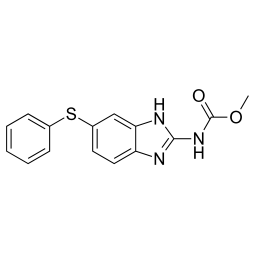

Fenbendazole - Panacur - Fenben - Safe Guard - Fenbenol - Fenbex Analysis Fenbendazole - Panacur - Fenben - Safe Guard - Fenbenol - Fenbex Analysis
Laboratory drug analysis to confirm the presence of fenbendazole and measure the amount of fenbendazole. The level of uncertainty in the fenbendazole content analysis depends on the selected specification (Standard <20%, Precise <10%, or Regulatory <5%). Follow the instructions to send...
Price €149.00 Regular price €199.00
Leave a comment